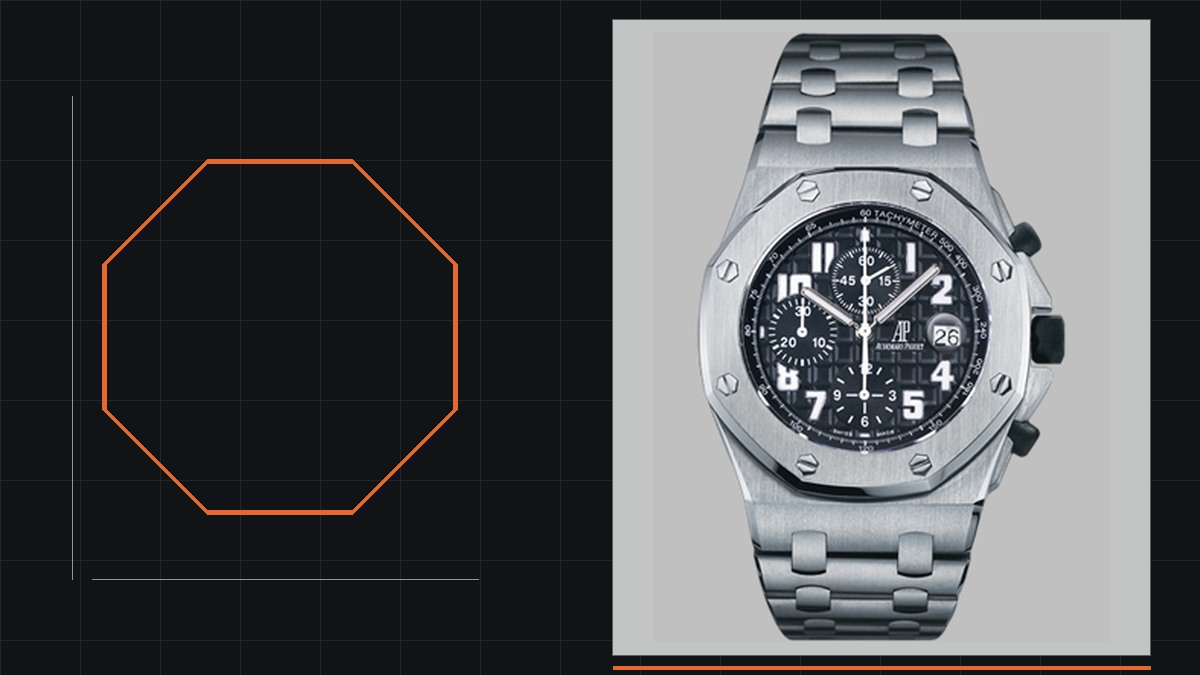
1–2. Identity first
- Confirm the exact AP reference or generation the watch is intended to reproduce.
- Confirm case size, material style, dial color and bracelet or strap configuration match that target.
3–5. Case geometry and hardware
- Inspect octagonal bezel symmetry and all eight screw recesses.
- Compare total case thickness and caseback projection from the side.
- Check crown, pushers and guards for the correct generation and even alignment.
6–7. Dial and hands
- Confirm Petite, Grande or Méga Tapisserie scale where applicable and inspect logo/marker alignment.
- Check hand lengths, lume, subdial hands and date-window centering.
8–9. Bracelet, strap and clasp
- Inspect case-to-first-link or strap-end fit with the watch hanging naturally.
- Check clasp engraving, hinge play, button action and sharp internal edges.
10. Movement claim
Record the exact movement the seller claims. If a clone calibre is named, ask which functions and dimensions are actually cloned. Movement decoration alone does not validate the claim.
11. Functional test
For chronographs, test start, stop and reset. For GMT or calendar functions, test adjustment and hand clearance. For time-only watches, check winding, crown positions, date change and basic rate data if the seller provides it.
12. Approval should be conditional on evidence
Approve the watch only when the photos and functional evidence agree with the written description. If water resistance matters, request a pressure test on the individual watch rather than inheriting the genuine AP rating.
Use a fixed image set every time
A repeatable QC process is easier when every watch is photographed from the same angles: straight front, crown side, opposite side, caseback, clasp, bracelet or strap junction, and a three-quarter view. Consistent angles make it easier to compare multiple units without being influenced by different presentation.
Separate cosmetic defects from reference errors
A dust speck, scratch or crooked marker is a unit-level defect. A wrong case shape, incorrect dial pattern or chronograph layout is a model-level error. The first may be solved by choosing another unit; the second may be inherent to the entire replica version. This distinction saves time when deciding whether to reject one watch or reconsider the product entirely.
Record functional results, not impressions
Write down whether the chronograph resets to zero, whether the date changes, whether the crown screws down cleanly and whether the clasp locks. “Feels good” is hard to compare later. A short list of pass/fail observations is more useful and makes repeated QC less subjective.
Magnification should be used strategically
Zoom in on high-information areas: the AP logo, date window, Tapisserie boundaries, bezel screw recesses and chronograph hand centers. Extreme magnification of every surface can exaggerate microscopic marks that are invisible in normal wear. QC is most useful when it distinguishes meaningful defects from camera-level imperfections.
Check symmetry with simple reference lines
A straight digital line through 12 and 6 o’clock can help reveal crooked logos, misaligned markers and shifted subdials. Another line across 3 and 9 o’clock can show whether the date or counters sit at matching heights. This simple method is more objective than relying only on visual impression.
Final approval should include the watch at rest
After testing complications, let the watch return to normal display and inspect it again. Chronograph hands can reset correctly but sit under tension or a date can change while remaining off-center. A final static review catches issues introduced or revealed by functional testing.
QC should end with a written summary
After reviewing photographs and video, record a short approval note: reference, movement claim, visible defects accepted, functional tests passed and any unresolved question. This creates a useful record if the delivered watch differs from the approved unit and makes future comparisons more disciplined.
Use the same checklist after delivery
Repeat the twelve checks when the watch arrives. Shipping can reveal bracelet damage, loose markers or function problems that were not visible before dispatch. Compare the delivered watch with saved QC photos and test crown, clasp, date and chronograph before exposing it to water or extended wear.
Source notes
Technical specifications in this file are cross-checked against manufacturer material where available.